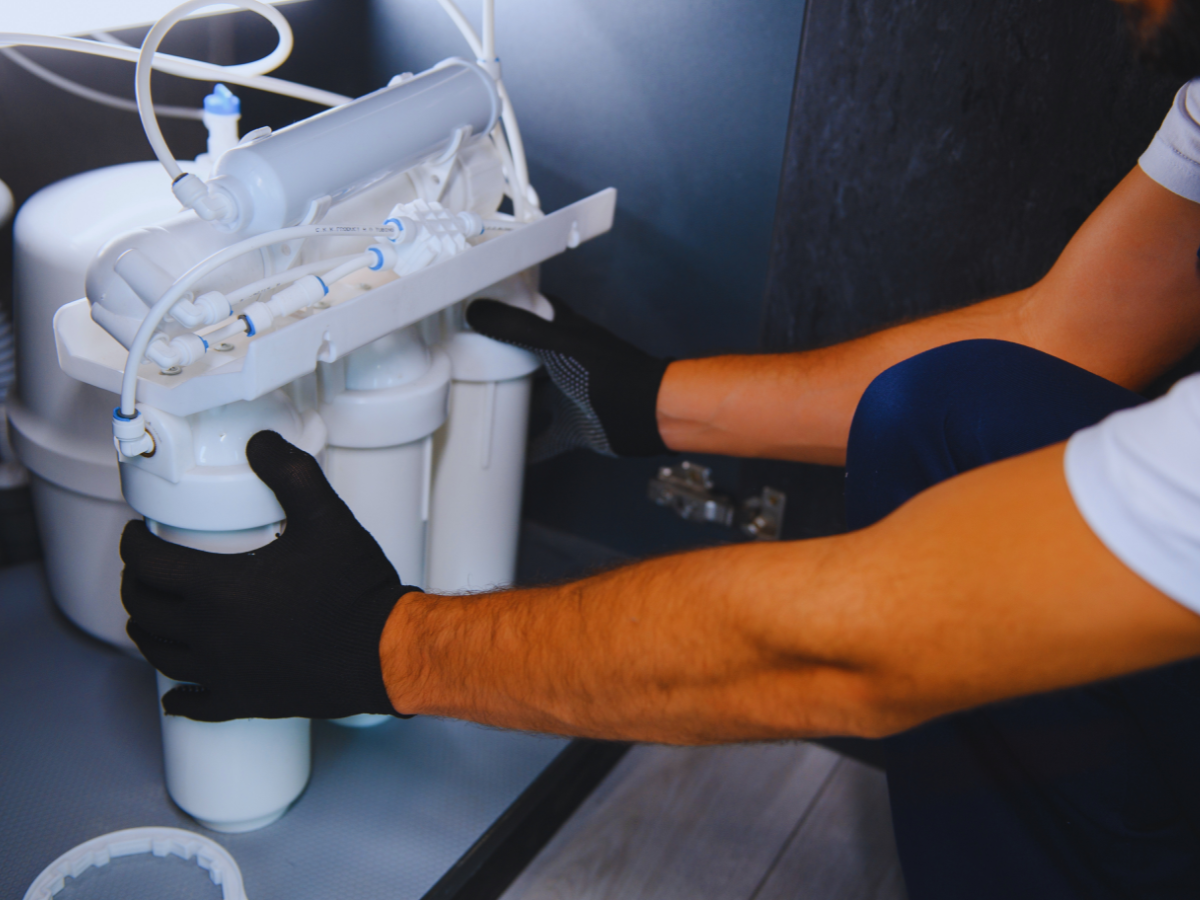
 Reverse osmosis is a water filtration method that uses pressure to force water through a membrane. It is an impressively effective way to produce some of the cleanest water for home use.
We will discuss how RO works, the contaminants it removes, whether it’s right for your home, and how to optimize your home’s RO system.
Quick Takeaways
- Reverse osmosis uses pressure to push water through a membrane.
- The membrane removes dissolved solids, chemicals, metals, and other microscopic contaminants.
- RO typically uses multiple stages before and after the membrane to improve water quality.
- Rejected wastewater carries away contaminants.
- RO delivers some of the best water for drinking, cooking, and protecting pipes and appliances.
What Is Reverse Osmosis Water Filtration
First, it helps to know what osmosis is. In nature, anything dropped into water tends to dissipate evenly throughout the solution. If you’ve ever dropped food coloring into a fluid, you’ve watched the cloud spread out. That is osmosis.
As the name implies, reverse osmosis does the opposite. It forces contaminants in the water from a dissipated state to a concentration. The water passes through, and then a wastewater system carries off the bad stuff.
RO typically uses a semipermeable membrane. This is a barrier that allows certain smaller molecules through, especially water. It then blocks anything too big, capturing unwanted materials for removal.
Carbon filters are the most common water treatment. They use a chemical process predominantly to react with chlorine. This doesn’t remove dissolved solids, metals, and other small molecules. RO membranes do filter these. Notably, most RO systems use carbon for pre-filtration because chlorine can reduce membrane effectiveness.
How Does Reverse Osmosis Water Filtration Work?
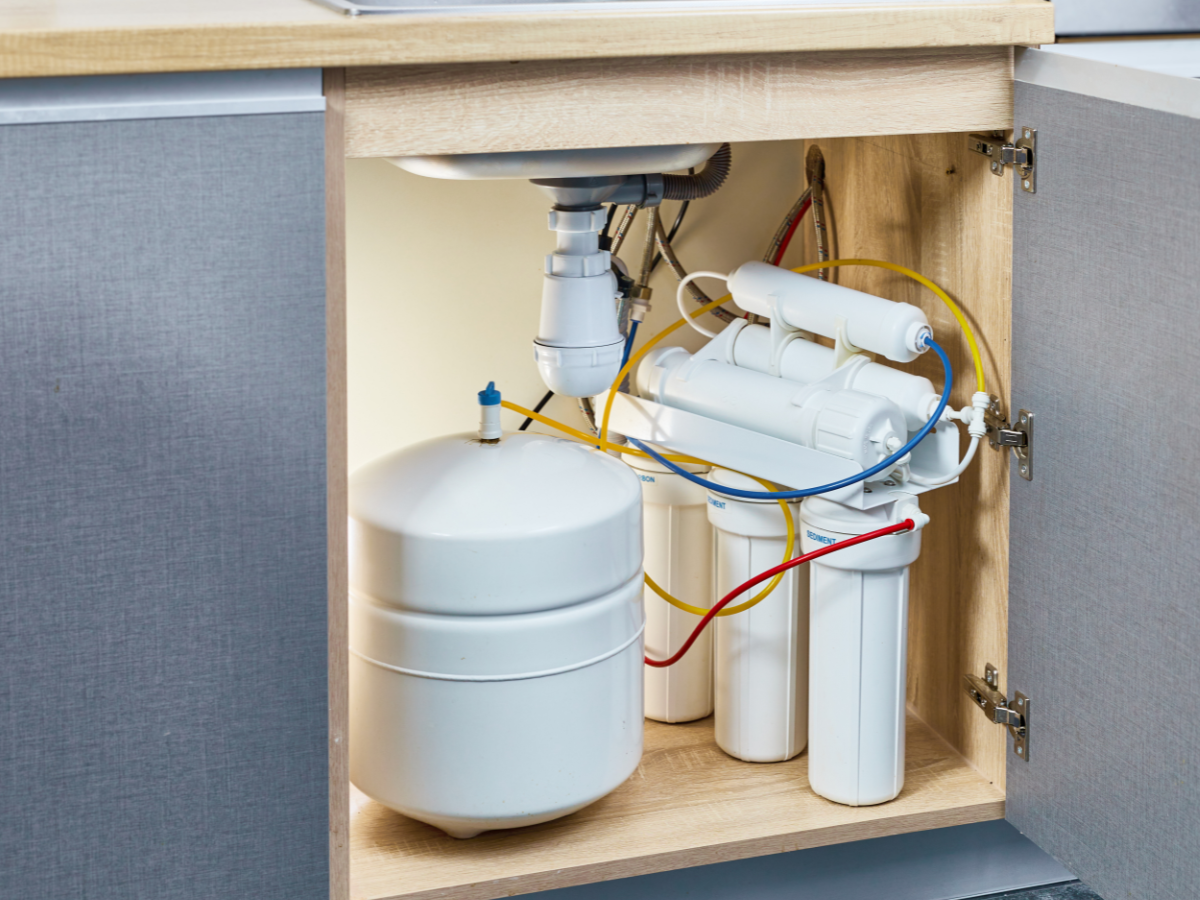
Most RO systems employ between three and seven stages. Each stage addresses a specific problem, improving the quality of your water.
Prefiltration
Prefilters are especially useful to eliminate contaminants that don’t justify the use of a membrane. Prefilters usually get rid of dirt, rust, and visible particles.
This ensures that the membrane will have a longer service life. If your system uses a water softener, it should appear in the pre-filtration sequence.
Activated Carbon
Sometimes also called activated charcoal, activated carbon reacts to chemicals, including pesticides, chlorine, chloramines, volatile organic compounds, and odor-causing molecules. This also tends to improve the taste of the water.
RO Membrane
The reverse osmosis membrane is the star. The system injects water into the membrane at 40+ psi. This method ensures that only pure water makes it through. Depending on the target contaminant, you can expect 95-99% of dissolved solids to filter out.
Notably, this requires two water streams. There is a permeation stream for forcing clean water into storage. Likewise, there is a concentration stream that carries away wastewater.
Post-Filtering
Additional optional filtration may appear after the membrane. Some systems include a second carbon filter to maximize taste and odor quality, for example. This is also a good spot for a UV light filtering system.
Accumulation
Reverse osmosis is a fairly slow process, so you need to accumulate the water for later use. A large accumulation tank is especially important if you intend to use RO treatment for water before it goes to appliances.
What Contaminants Does Reverse Osmosis Remove?
 RO will remove a variety of heavy metals, dissolved solids, chemicals, and synthetic compounds.
These include:
- Lead, arsenic, mercury, and chromium
- Fluoride
- Salt
- PFAS or so-called forever chemicals
- Volatile organic compounds
- Pesticides, herbicides, and pharmaceuticals
Notably, membranes generally don’t remove a lot of smaller viruses and bacteria. If you have concerns about smaller pathogens, it is best to add a UV filter to your overall setup. Some dissolved gases may also make it through the system, especially if there isn’t sufficient carbon-based filtration.
Benefits of Reverse Osmosis
RO yields radically cleaner and safer drinking water. It also improves taste. If you’ve had problems with contaminants in kettles, coffee makers, ice machines, or water dispensers, RO is an excellent choice.
RO also yields long-term cost savings for households that are heavy consumers of bottled water, reducing plastic waste.
Limitations of Reverse Osmosis (What Homeowners Should Know)
The wastewater cleaning process is significantly less efficient than many other water treatment techniques.
You can, however, improve RO efficiency by:
- Properly calibrating your house’s water pressure
- Employing a permeation pump
- Reclaiming wastewater for gardening or landscaping
RO also removes some beneficial minerals from the water, particularly calcium and magnesium. If you are having issues getting enough of these minerals through your diet, you should consider adding a remineralization system as part of the post-filtration process.
Maintenance
The individual filters may last between six and twelve months. A typical RO membrane lasts for two to three years. Overall, the annual operating cost sits in the $100-400 range.
The variance mostly depends on the complexity and the number of additional stages. Also, additional injection capacity for the permeation stage may raise electric and water consumption.
Performance
Overall output from an RO filter is usually slower than a whole-house filter. Notably, some whole-house solutions do use membranes. A storage tank will compensate, but you may want to think strategically about RO usage.
Is Reverse Osmosis Right for Your Home?
RO works best in cities with known water issues. Some people also use RO to remove the sodium that comes with water softener systems. RO is also excellent for protecting appliances. Likewise, families with infants, elderly members, or immunocompromised members may want to use RO.
Types of RO Systems
Undersink and countertop RO systems are popular because they position filtration where it’s most needed. Whole-house systems make sense in limited cases, usually in areas with high rates of arsenic or saltwater intrusion.
How to Maintain an RO System
Perform pre- and post-filter changes every 6-12 months. Replace membranes every 2-3 years. It is also wise to check the filters and membrane monthly, especially during the first year of ownership, to confirm they aren’t clogging. Periodic sanitation of the tank should coincide with your system’s annual checkup.
Consider scheduling service if you notice any issues.
Some common signs of problems include:
- Low water pressure, especially at the faucet
- Leaks
- Odd odors or tastes
FAQs About Reverse Osmosis Water Filtration
Does RO remove bacteria and viruses?
RO alone doesn’t remove bacteria and viruses. Consider a UV light treatment system if you’re worried about pathogens.
How much water does RO filtration waste?
Most systems use four gallons of water to remove waste for every gallon of water cleaned.
Does RO remove healthy minerals?
Yes, RO removes healthy minerals. Most people get enough of these from their diet, though, and remineralization is an option.
Can RO remove fluoride?
Most reverse osmosis methods remove 85-95% of fluoride. RO is one of the few widely used methods for removing fluoride.
How long does an RO membrane last?
Most RO membranes last 2-3 years.
Is RO better than activated carbon?
Reverse osmosis removes more dissolved solids, heavy metals, and forever chemicals. Carbon is cheaper, and it is almost always a pre-filtration method for RO.
Need Reverse Osmosis Installation or Service? Call the Punctual Plumbers
 Folks in Tampa, FL, know that Benjamin Franklin Plumbing is the home of the punctual plumbers. We offer professional RO installation, troubleshooting, repairs, and maintenance. You can also request filter replacements and RO upgrades, including remineralizers and permeation pumps. We are known for fast, clean, and punctual service, too.
Contact Benjamin Franklin Plumbing to learn how a proper installation of reverse osmosis water filtration can make the water in your Tampa home cleaner and safer.