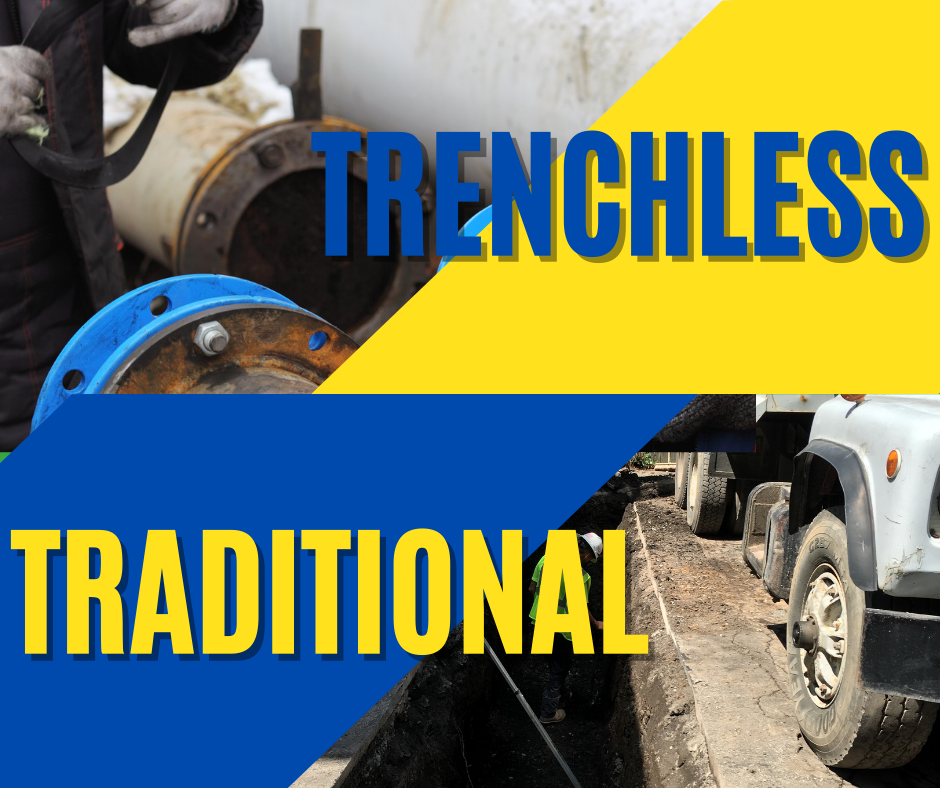
 Trenchless and traditional sewer repair are the two most common methods for fixing lines, but they are quite different. The trenchless sewer repair method involves fixing the line from within while minimizing digging, usually by relining the pipe. Conversely, the traditional sewer repair method involves excavating the line and replacing a section or the whole thing.
Trenchless sewer repair vs traditional is a choice many Tampa, FL, homeowners have to make. Here is a look at how the two techniques work, what the associated costs are, and when each is likely to be the best option for your household.
Quick Takeways
- Trenchless sewer repair uses small access holes to insert advanced tools for replacing or relining pipes. This means less digging and a much smaller mess.
- Traditional sewer repair leads to a complete excavation, potentially digging up many cubic feet of your yard.
- Trenchless sewer repair tends to be speedier, cleaner, and more cost-effective.
- Traditional techniques are best suited to dealing with severely collapsed pipes and inaccessible lines.
Your choice between traditional and trenchless options will come down to the pipe’s condition. Likewise, the layout of the property may also influence the choice.
What Is Traditional Sewer Repair?
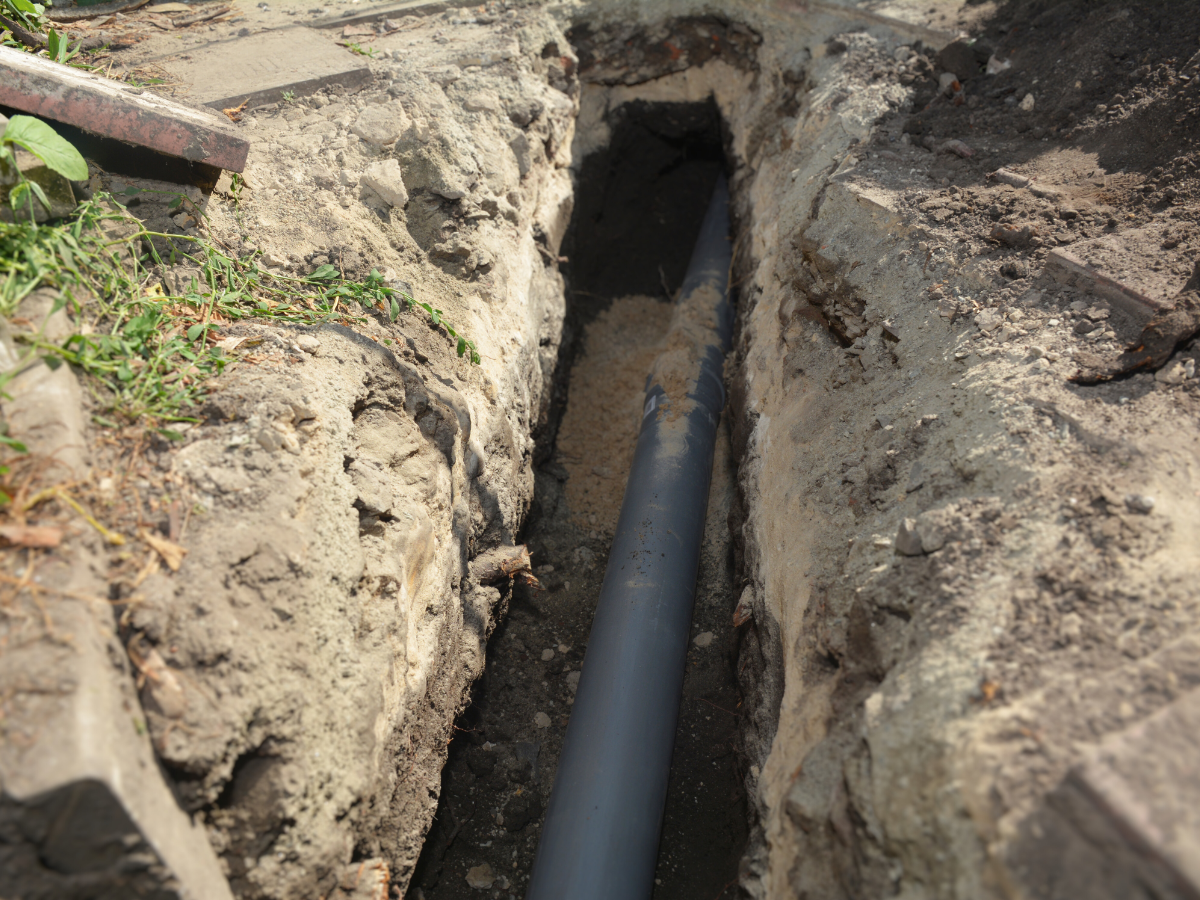 Digging up and replacing pipes has been the industry standard for decades. The process commonly employs heavy equipment, particularly at least one excavator. The goal is to remove the old line, install a new pipe, fill in the trench, and restore the surface. Traditional repair projects are usually multi-day jobs.
Pros and Cons of Traditional Repair
The traditional method works regardless of the pipe’s condition. Even if the pipe is severely damaged or effectively gone, digging a trench and putting in a new pipe works. It also provides a full visual of everything that’s going on, so you can see the state of the pipe and how advanced problems like tree root intrusion are.
On the downside, it is a labor- and equipment-intensive process. It eats time and is messy, damaging lawns, driveways, sidewalks, and landscaping. Also, you often spend additional money restoring the property afterward.
What is Trenchless Sewer Repair?
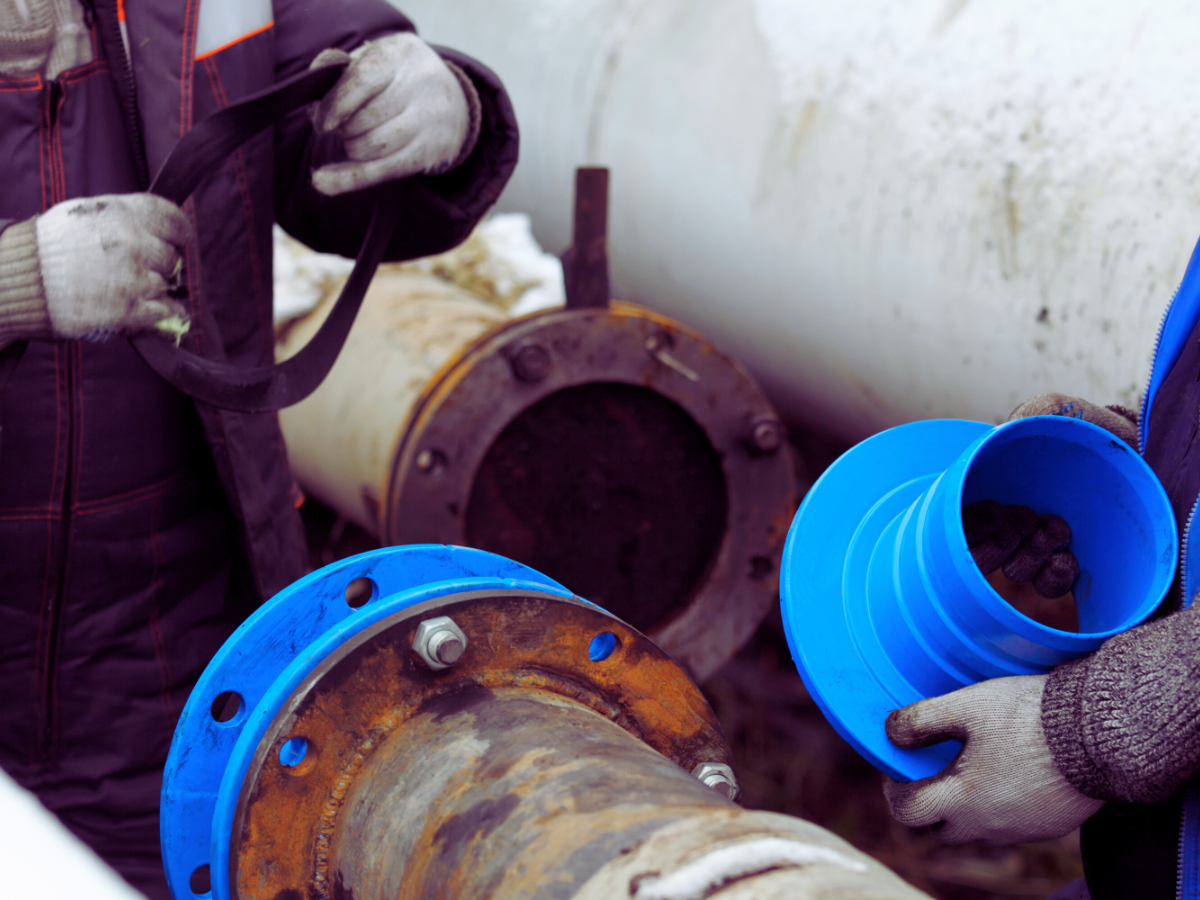 Trenchless techniques involve no digging. In many cases, drilling a small access hole is necessary to get tools and lining into the line.
The industry commonly uses two trenchless methods. Pipe lining involves inserting a resin liner and curing it into place to provide a new interior for the affected pipe. Pipe bursting breaks the old pipe while pulling a new line into the same area occupied by the previous one.
Pros and Cons of Trenchless Repair
The big selling point of trenchless sewer repair is that there’s little to no digging. Consequently, the landscape remains undisturbed. It is also fast, with many jobs taking just one day.
Trenchless repairs tend to also last a long time, with durability often exceeding 50 years. With less soil disturbance, fuel usage, and materials, trenchless methods are also more environmentally friendly.
One notable downside is that trenchless sewer repair isn’t suited to every situation. If the pipe totally collapsed, a new line needs to go in.
Likewise, trenchless techniques often aren’t feasible for lines that are too shallow. The work involves specialized contractors, since many traditional companies don’t use the technique. The initial cost, not factoring in landscaping recovery, is also sometimes higher.
Trenchless vs Traditional – Head-to-Head Comparison
| Feature | Trenchless Sewer Repair | Traditional Sewer Repair |
|---|---|---|
| Digging Required | Minimal (two access holes) | Full trench excavation |
| Project Time | 1–2 days | 3–7 days |
| Damage to Property | Minimal | Significant |
| Cost Range | Moderate upfront, lower restoration | Lower upfront, higher restoration |
| Lifespan | 50+ years | 40–50 years (material dependent) |
| Environmental Impact | Low | High |
| Best Use Case | Moderate damage under landscaped or paved areas | Severely collapsed or easily accessible pipes |
When to Choose Trenchless Sewer Repair
 Trenchless sewer repair is often a solid choice if a line runs under a driveway, sidewalk, or structure. If you have desirable landscaping features that you don’t wish to disturb, you may want to schedule a trenchless repair. This is often a good idea even if the line doesn’t run right under the landscaping because equipment and materials often disturb much of a yard.
The trenchless approach is minimally invasive and leads to faster repairs, too. If you’re dealing with a cracked, leaking, or partially collapsed pipe, using a trenchless method is likely feasible.
Avoid trenchless repairs if the pipe is totally damaged, especially due to crushing or collapse. If there are utility conflicts, such as gas lines in the ground, you may need to see what else is going on in the ground using a trench technique.
Misaligned pipes also usually rule out trenchless repair. Likewise, it is less than ideal when the soil is unstable.
When Traditional Repair Makes Sense
Traditional repairs work best when the pipe is too shallow for trenchless tools. Severe root intrusions and complete pipe collapses require traditional repair, too.
Budget constraints also sometimes make the traditional approach the only option. Many contractors will perform a camera inspection before asking you to decide.
Environmental and Long-Term Benefits
Trenchless repair preserves topsoil, plants, and hardscaping. Using less equipment, it also has a smaller carbon footprint. By not discarding old piping, it reduced landfill waste. Both methods usually involve eco-friendly pipe materials, but the trenchless approach normally has less environmental impact.
FAQs About Trenchless vs Traditional Sewer Repair
Is trenchless sewer repair really better?
In most cases, the answer is yes. Trenchless techniques are faster, cleaner, and more durable. However, it probably isn’t the best choice if the pipe is collapsed or in bad shape.
How long does trenchless sewer repair last?
Depending on the materials and installation quality, a trenchless repair will last 50 years or more.
Can trenchless repair fix collapsed pipes?
If the pipe has suffered a major collapse, traditional excavation and replacement is likely the only option. However, trenchless methods often work for minor collapses that haven’t progressed too far.
Does trenchless sewer repair cost more?
The upfront cost is usually higher. Homeowners typically achieve savings compared to traditional repair, though, because they don’t have to fix damaged landscaping and hardscaping.
How do I know which method I need?
Schedule a professional camera inspection. It is the only way to determine the condition of the pipe, allowing you to choose the best approach for your project.
Find Out Which Sewer Repair Is Right for You
 Avoid the guesswork. Our licensed technicians would be glad to perform a camera inspection. We can then explain whether trenchless or traditional repair is better suited to your situation, with an eye toward which will save you money in the long run.
Tampa Benjamin Franklin Plumbing is home to the punctual plumbers. We proudly serve Tampa, FL, offering sewer line repair and replacement services. Contact us right away if you’re worried about a damaged sewer line.