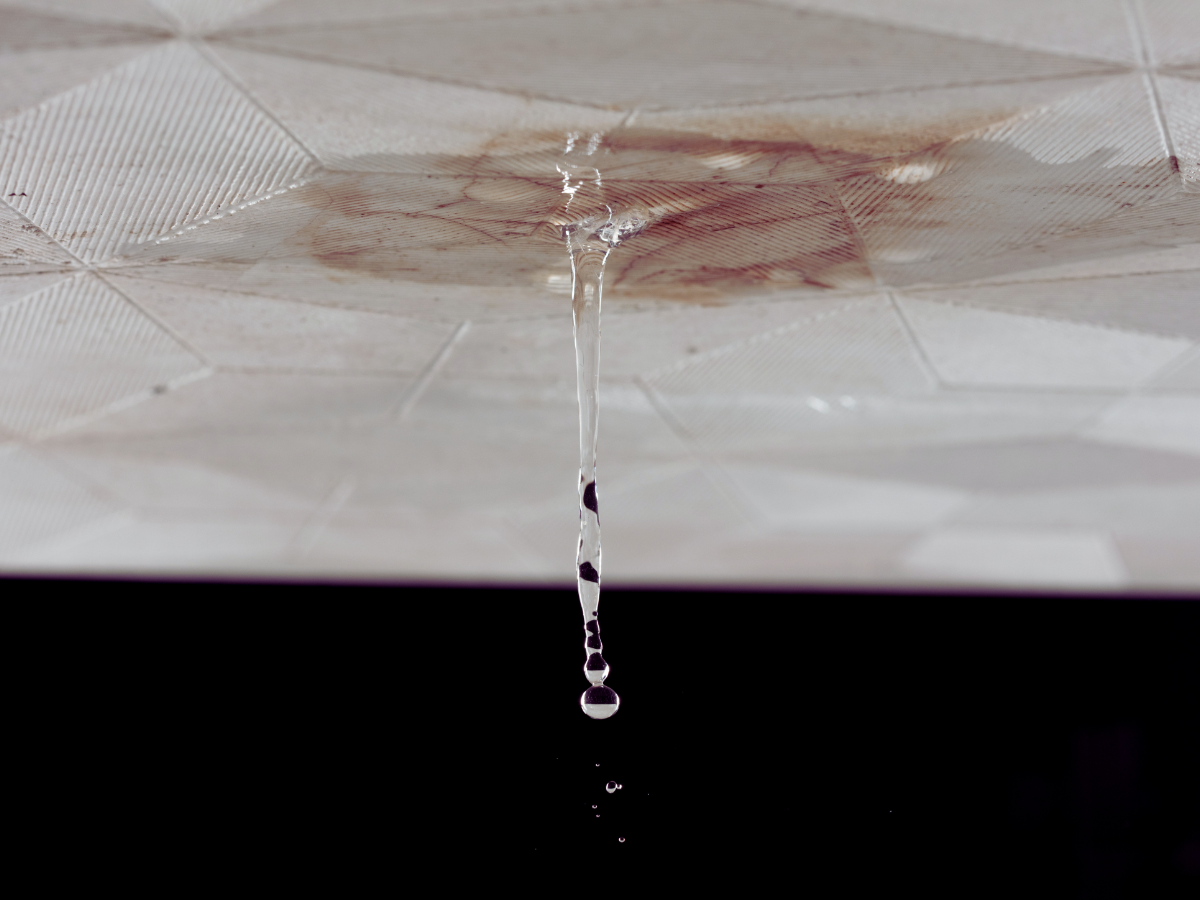
 As a homeowner, it’s always an unpleasant moment: gazing up at your ceiling and seeing a brown or yellow spot. It’s unsightly. It’s ominous. And it might be spreading.
But what caused your ceiling stain? What can you do about it? Will it only get worse?
Many homeowners assume, when they see ceiling stains, that their roof is leaking. However, other hidden moisture problems can cause these discolorations: plumbing leaks, air conditioning issues, unseen condensation, and more.
To permanently remove a ceiling stain in your Tampa home, then, the first step is to correctly identify the source. Not to mention, it helps to know when it’s time to call a professional for help.
Quick Takeaways
- Plumbing and roof leaks, HVAC problems, and attic condensation can all cause ceiling water stains.
- Water often travels through a home before staining a ceiling. Therefore, your ceiling stain might not be directly below your leak.
- If your ceiling stain grows, darkens, or bubbles, there’s probably an active moisture intrusion.
- Tampa’s humidity and heavy rains can worsen moisture-related ceiling issues.
- Hidden leaks can lead to mold growth, drywall damage, and electrical hazards.
- Professional detection services can locate your hidden plumbing leaks without unnecessarily damaging your walls or ceilings.
What Causes Ceiling Water Stains?
When it comes to staining ceilings, these are the most common culprits:
1. Roof Leaks
As common sense would dictate, roof leaks are usually caused by damaged roofs.
Flashing failures are one type of roof damage. That’s when the seals around a vent, skylight, chimney, or other opening crack, loosen, or corrode. Water will penetrate those compromised seals.
Damaged roof shingles often cause leaking, too. Heavy winds can break or tear off shingles. Falling branches and flying debris can shatter them. Also, aging and UV light can weaken them.
Note that, if a roof is leaking, heavy rains will probably make a ceiling stain worse.
2. Plumbing Leaks
Many factors can lead to plumbing leaks: loose pipe connections, corroded pipes, high water pressure, and damaged appliance hoses, just to name a few. And upstairs plumbing problems often cause downstairs ceiling stains.
Moreover, slow plumbing leaks — perhaps one drip at a time — might not stain a ceiling right away. Rather, weeks could pass before a stain forms.
3. Upstairs Bathroom Leaks
In particular, upstairs bathrooms are frequently responsible for ceiling stains. Leaking bathroom drains, toilet wax ring failures, overflowing bathtubs, and broken shower pans are just some of the reasons why.
4. HVAC Drain Line Problems
When an HVAC drain line clogs, it might leak and lead to stains.
One example is when an air conditioning condensate drain gets blocked by dust, dirt, mold, or other debris. In that case, the condensation — which is the water your AC produces as a cooling byproduct — has nowhere to go. Thus, it’ll simply leak out.
An attic air handler — the indoor half of a split-system HVAC unit — could clog as well. Slime, algae, insect nests, and other materials can build up inside the drain line.
In addition, some homeowners use drain pans to catch the excess moisture that drips out of their HVAC units. If you neglect a drain pan and it overflows, though, water damage can ensue.
5. Attic Condensation
When warm, humid air rises and mixes with cooler attic air, the combined air will condense. And the resulting moisture could accumulate until it finally leaks. This issue is known as attic condensation.
Florida’s heat and humidity exacerbates attic condensation. Furthermore, poor home ventilation can trap humidity indoors, which likewise worsens this problem.
6. Water Heater or Appliance Leaks
Simply stated, if a home appliance uses water, it could leak someday. (Water heaters, washing machines, and refrigerators are three examples.)
Clogged appliance drains, worn-out mechanical parts, and loose hose connections can all lead to leaks and, yes, ceiling stains.
Why Ceiling Water Stains Don’t Always Appear Directly Under the Leak
 When water leaks inside a home, it may travel along various routes before settling down above a ceiling. Those pathways could include:
- Rafters
- Joists
- Insulation
- Pipes
For this reason, a ceiling stain could form several feet away from the actual source of the leak.
What Does a Water Stain on the Ceiling Mean?
A ceiling water stain might be old and nothing to worry about. Generally speaking, old stains are dry and light in color — often yellowish.
Sometimes, though, a ceiling stain indicates an ongoing moisture problem. Such stains are usually dark and damp. They can also cause drywall to sag and paint to bubble or peel.
Signs Your Ceiling Water Stain May Be From a Plumbing Leak
When a plumbing leak causes a ceiling stain, these statements are often true:
- The stain worsens whenever a faucet or shower is running.
- The home’s water pressure is reduced.
- There’s a musty smell inside the house.
- The ceiling feels soft or warped.
- The household’s water bill has increased.
Can Ceiling Water Stains Become Dangerous?
If left untreated, a ceiling stain could cause more serious problems, including:
- Mold growth
- Ceiling collapse
- Electrical fire risks
- Rotting wood
- Structural deterioration
- Indoor air quality declines
Why Tampa Homes Are More Vulnerable to Ceiling Moisture Problems
The following factors are common throughout Tampa, making the region’s homes especially susceptible to spots on the ceiling:
- High humidity
- Frequent heavy rainstorms
- Attic condensation
- Aging plumbing systems
- HVAC systems running heavily year-round
- Slab foundation moisture migration
How Professional Leak Detection Finds Hidden Ceiling Leaks
Fortunately, plumbing professionals have highly effective yet non-invasive techniques for locating ceiling leak causes. Among these methods are:
- Acoustic leak detection
- Thermal imaging
- Moisture mapping
- Diagnostic pressure testing
Benjamin Franklin Plumbing: Finding Leaks, Stopping Damage, Saving Ceilings
 In the end, ceiling water stains aren’t cause for panic. Instead, if you act promptly, you can stop the water damage from worsening.
The best approach is to call a licensed professional, someone who can offer advanced leak detection, a fast diagnosis, and an effective solution. That way, you could protect your home from costly destruction.
If you’ve noticed ceiling water stains inside your Tampa home, Benjamin Franklin Plumbing is here to help. Our Punctual Plumbers provide professional leak detection services throughout Tampa and the surrounding areas. We find hidden plumbing leaks quickly and accurately every time.